WORK PLAN: CEPEJ Unveils Programmes, Activities, Strategies for 2026
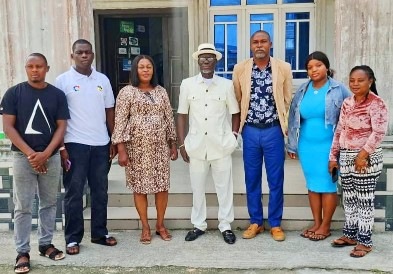
On Wednesday, January 21, 2026, the National Coordinator of the Center for Peace and Environmental Justice (CEPEJ), Chief Sheriff Mulade, Ph.D, met with various executives and representatives of media organisations in the Africa 4 Peace Center at Ugolo, near Osubi, Okpe Local Government Area of Delta State, to present the Pan African development advocacy group's Work Plan for the 2026 year.
The Work Plan which gives summary details of CEPEJ's planned programmes, activities, and strategies for the year is "designed to guide systematic implementation of education, environmental justice, sports, climate action, capacity building, peace building, economic development, governance, and community development interventions" across various states in Nigeria.
According to the civil society organization, the "work plan reflects CEPEJ-Africa’s commitment to promoting peaceful coexistence, environmental sustainability, climate resilience, good governance, and community empowerment, in alignment with national development priorities and the sustainable development goals (SDGs)."
Mulade assures that the successful implementation of the 2026 strategic Work Plan which "provides a clear, actionable roadmap for CEPEJ-Africa to deliver impactful peace building, environmental justice, and community development interventions... will contribute significantly to sustainable peace and environmental resilience in Nigeria."
Below is a summary of the CEPEJ 2026 Work Plan whose overall goal is to "promote sustainable peace, environmental justice, support education, climate resilience, and foster economic empowerment through structured advocacy, capacity building, policy engagement, and grassroots interventions."
OBJECTIVES: The specific objectives are:
1. Strengthen peace building mechanisms and conflict prevention at community, local and state government levels.
2. Promote environmental protection, climate change awareness, and sustainable practices.
3. Enhance community participation in governance, accountability, and social justice.
4. Build the capacity of youth, women, and community leaders as agents of peace and environmental stewardship.
5. Strengthen institutional coordination, monitoring, and partnerships for effective program delivery.
SCOPE OF THE WORK PLAN: This work plan covers urban and rural communities across Abia, Anambra, Akwa-Ibom, Bayelsa, Borno, Delta, Enugu, Edo, FCT-Abuja, Kano, Lagos, Niger, Ondo, Oyo, and Rivers States with focused interventions at: Community level, Local Government Areas (LGAs), Women group networks, Sports and educational institutions, Security agencies, Civil society and youth networks, Traditional and religious institutions, and Government ministries, departments, and agencies.
THE STRATEGIC WORK PLAN: CEPEJ's strategic plan for 2026 focuses on the following:
1. African for Peace (A4P) Sports Development Program (Catch Them Young Football Tournament) for under 15 years: this is to scout for talented young players, and provide opportunities for them to showcase their skills, gain exposure and be able to represent their country or join professional clubs.
2. Quiz & Essay Competition for Riverine and Rural Secondary Students in Delta State to encourage learning and academic excellence among students in rural / riverine areas.
3. Support for Youths and Women Empowerment Programmes through industrialization (Skills Acquisition / Vacational Training) to equip youths and women with relevant skills by providing training, tools, and resources for personal and economic growth.
4. Unveil the Niger Delta Peace Support Fund (community peacebuilding awareness creation and capacity building for community leaders / youths / women) to promote and support initiatives that foster peace, security, and development in the Niger Delta region.
5. Unveiling of Educational Support Fund (Back to School Program) to enable and encourage disadvantaged students to access quality education.
6. Re-presentation of the proposal for the establishment of State Peacebuilding Commission in Delta, Edo, Bayelsa, Rivers, Ondo, Akwa-Ibom states to the Executive Governors and State Houses of Assembly in Delta, Edo, Bayelsa, Rivers, Ondo and Akwa Ibom, to deepen sustainability of peaceful coexistence, create enabling atmosphere for investors and employment opportunities for the youths.
7. Non-Violent Election Program (Sensitization Program on Civic and Voter Education, Election Observers, Training of Election Peace Monitors, Community Stakeholder Network and Multi-Stakeholders / Roundtable Discussion) with the aim of promoting peaceful elections, encourage calm, secure, and transparent electoral processes, mitigate conflicts and promote tolerance among political stakeholders and promote free, fair, and transparent elections.
8. Environment Awareness Program (Climate Change and Clean Environment Awareness Creation for Communities) which aims to educate people about environmental issues, importance of conservation and food security.
9. Drug Abuse and Cultism Awareness Program (awareness creation for primary and secondary schools in Delta State) to raise awareness on the danger of drug abuse, cultism and social vices on pupils and students.
10. Expansion of CEPEJ Peace and Environment Clubs in Niger, Delta, Bayelsa, FCT and Kano States with the aim of developing skills and confidence for students to drive positive change in peacebuilding and sustainable environment.
11. Establishment and Coordination of CEPEJ-ADR (Alternative Dispute Resolution) Mediation Centers in Delta to provide accessible platforms for resolving conflicts through mediation, arbitration etc.
12. Delta State Ethnic Peace & Unity Football Tournament which aims to foster and promote peaceful coexistence, strengthen bonds amongst the youths; scout and discover talented players for potential opportunities.
13. Strengthen PIA- HCDTs (capacity building, leadership training, proposal development, people management, report writing, etc.) to strengthen PIA-HCDTs to enable them deliver on their mandate.
14. Warri Peacebuilding Awareness Creation Program (Multi-Stakeholders Dialogue/Town Hall) to deepen understanding and foster reconciliation among the ethnic groups in Warri Federal Constituency.
15. IDPs Support Program: To offer essential needs like food, shelter, healthcare, etc to flood victims, person affected by communal conflicts, banditry attacks, etc.
CEPEJ IMPLEMENTATION STRATEGIES: The Implementation will be carried out through: Community-based participatory approaches, Strategic partnerships with government, international development agencies, NGOs, FBOs, CBOs and CSOs, Engagement of trained volunteers and facilitators, and Periodic coordination meetings.
MONITORING AND EVALUATION PLAN: Monitoring and evaluation will ensure effective and efficient program delivery, accountability and learning through: activities tracking tools, Work Plan Review and Progress Reports (monthly and quarterly), Field monitoring visits, and Lessons learned documentation.
RISK MANAGEMENT & SUSTAINABILITY: The Potential risks such as funding constraints, security challenges, and community resistance will be mitigated through stakeholder’s engagement, flexibility, and partnership building. While sustainability will be ensured by strengthening community ownership and institutional collaboration.
#penglobalcommunity #CEPEJ #WorkPlan2026 #Nigeria